By Rebecca Lynn Sprague | May 22, 2026
For many who love Block Island, a final wish is to have their cremated remains scattered in the surrounding ocean or sent into the wind off the Mohegan Bluffs. Family and friends can then return to the island itself to remember a loved one lost. Despite the beauty of this ritual, it leaves those grieving without the traditional pilgrimage to one of the most beautiful vantage points on Block Island: the Island Cemetery.
But it’s not just the view they are missing; it's the custom of memorialization through inscription in stone. Gravestones and cemeteries provide a space for community members to remember and grieve together. It is not only those who were closest to the deceased who grieve; anyone who came into contact with them, and the community as a whole, participates in the process. Cemeteries also serve as an essential resource to historians and genealogists.
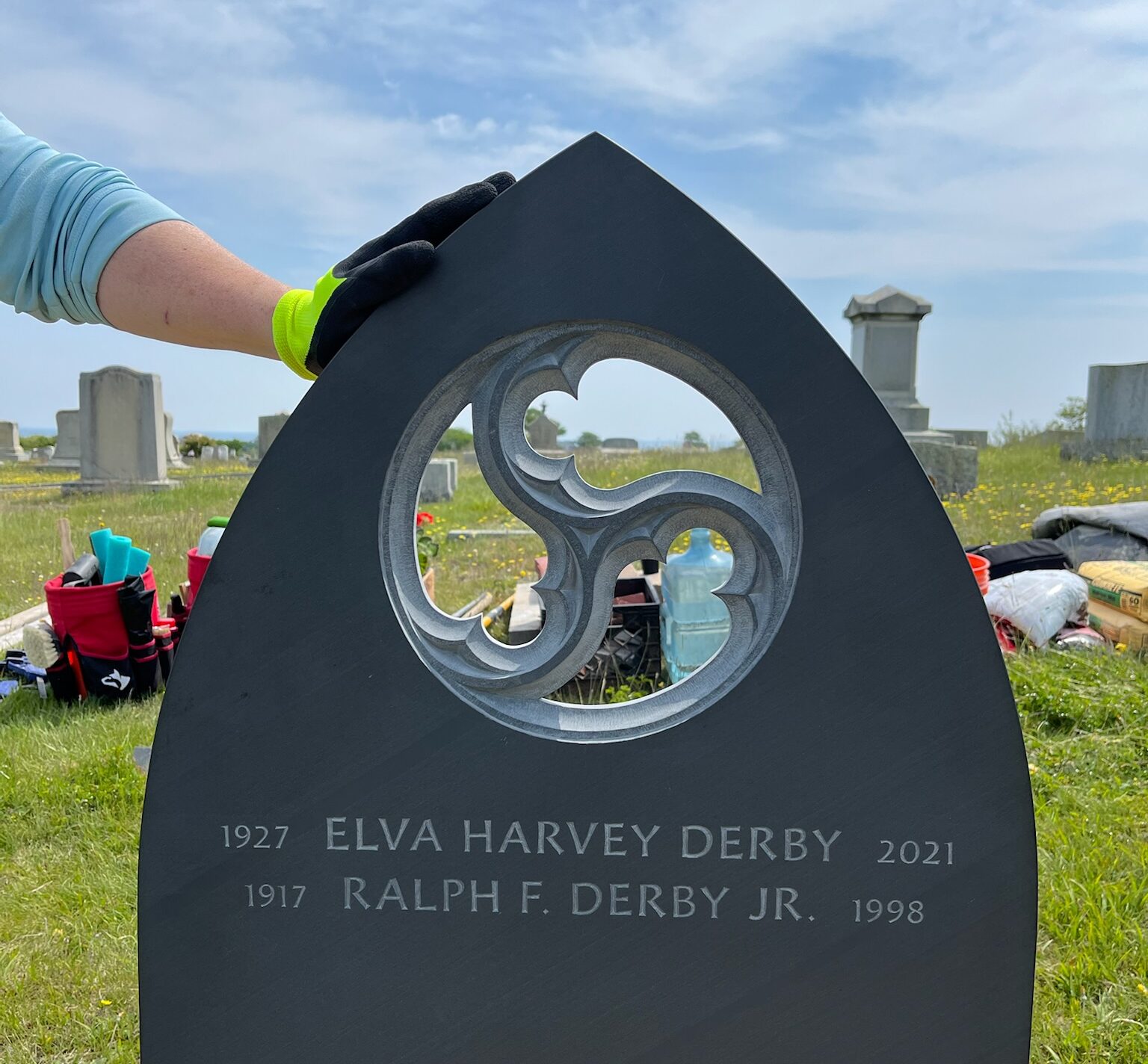
A new memorial cenotaph installed at Island Cemetery provides an elegant solution to this dilemma. For those unfamiliar with the term, a cenotaph is a monument or tomb erected in memory of a person or group of people whose bodily remains are located elsewhere. The cenotaph offers a way to honor loved ones who have a deep connection to the island, but whose ashes have been scattered or whose remains are buried off-island.
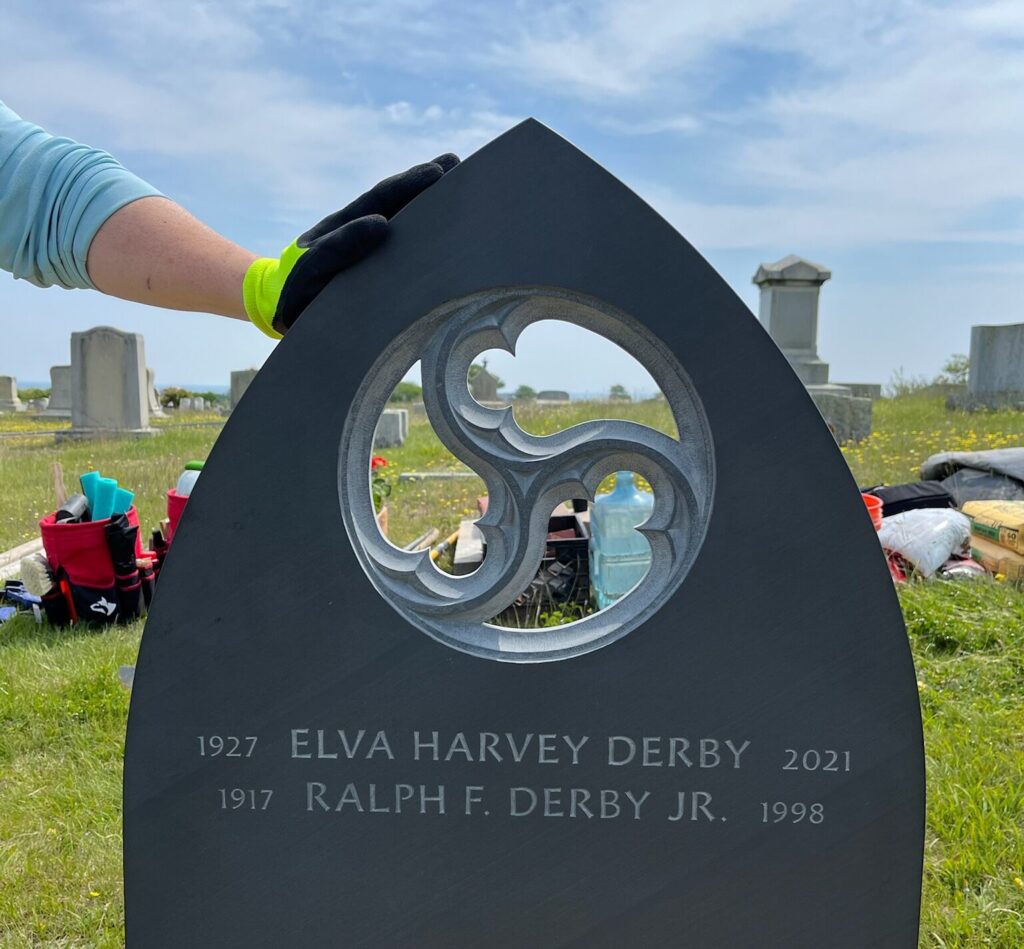
The austere marker is anything but your average headstone. It is a one-of-a-kind piece of art made by the Karin Sprague Stone Carvers shop located in Scituate, R.I. The triform, through-carved fish-bladder motif was conceived and hand-carved by sculptor Rob Gil, and emerged from his fascination with architectural tracery. On each side of the black slate, there is space for 12 names and dates, which will also be carved by hand.
Two names have already been inscribed on the stone: that of Elva and Ralph Derby, whose ashes were scattered in all their favorite places on the island. Elva, who grew up on Block Island, moved to the mainland for work and met Ralph Derby from Maine. Elva talked so much about the island that Ralph was determined to return together. “Someday I'll take you home, babe,” he would say. After retirement, they moved into the little, then-yellow house tucked between Lakeside Drive and Fresh Pond.
At that time, Ralph and Elva served as Karin Sprague’s caretakers when Karin moved to the island at 19. The art school dropout worked bartending and painting houses until she had the idea to begin her own sign-making business on the Island. Sign-painting soon evolved into sign-carving, and wood-carving eventually led to stone. After the death of her father-in-law, Francis Clyde Sprague, Karin felt called to carve his gravestone, and in 1998, her very first memorial was installed at Island Cemetery. Since then, Karin has installed 15 memorials in that cemetery, as well as a monument memorializing the Manisseans, located on Lakeside Drive near the Indian Cemetery.
The cenotaph can be found by taking the second right after entering the stone pillars of the Island Cemetery’s main entrance. Turn again to the right side, where the dark slate marker sits on a quiet, sloping hill. Over time as more names are added to the slate, the cenotaph will become a record of those who, though their ashes be carried away on the sea or remains are buried in a faraway town, have nonetheless been shaped by and have shaped the community of Block Island. It will be a place to stand, to read or touch their names, and to remember loved ones as individuals within the community they are a part of.
Inquiries regarding memorializing a loved one on the cenotaph can be directed to Block Island Cemetery Sexton, Michael Shea, at cemeteries@new-shoreham.com. Alternatively, contact the Karin Sprague Stone Carvers studio at (401) 934-3105. A portion of the inscription costs goes to the Town of New Shoreham.
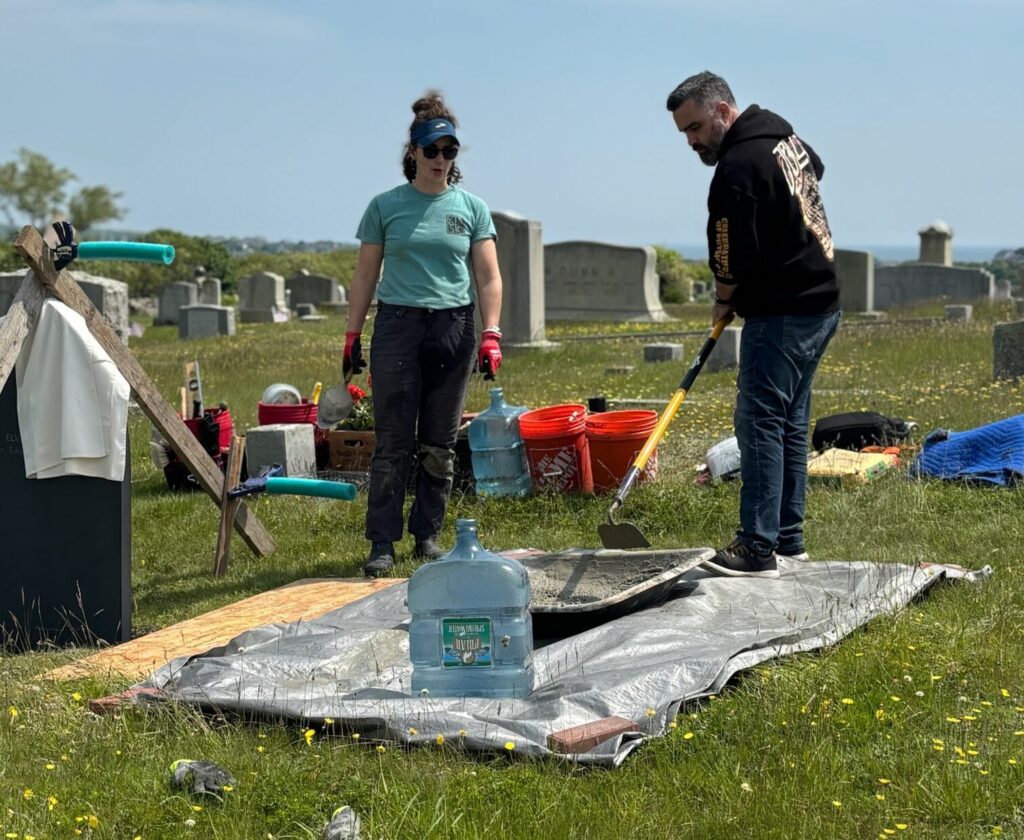
Kristin Sprague & Rob Gil installing the cenotaph at the Island Cemetery.


